Niche 2024
Reimagining the User Registration Flow to reduce drop-off
How redesigning Niche's registration experience — with better copy, a reordered layout, and a full-page flow — made the process feel less like a form and more like a college application.
ROLE
Senior Product Designer
RESEARCH
10 User Interviews with Students and Parents
TOOLS
Figma, Maze, Miro
OVERVIEW
Flipping the college application model
At Niche, the mission is to connect high school students with colleges through a unique matching process — flipping the traditional application system by having schools match to students based on predetermined criteria. The aim is to broaden students' awareness of available college options and encourage enrollment in lesser-known institutions.
The registration flow is the critical first step in that process. If students don't complete it, they never see their matches. Our goal was to reimagine the registration experience to make it more personalized, reduce drop-off, and make it feel less like a tedious form and more like building a profile that would unlock real opportunities.
CHALLENGES
Two problems worth solving
Relationship managers were struggling with fragmented data and inefficient workflows when managing major donor portfolios in Bloomerang CRM. The pain points were consistent across users.
High drop-off rates
The existing registration flow was tedious and did not immediately demonstrate its value to users — leading to students abandoning the process before completing it.
Profile clarity
The flow felt like a generic sign-up form. We needed it to feel more like creating a college application profile — making it clear that this information directly connects students with schools.
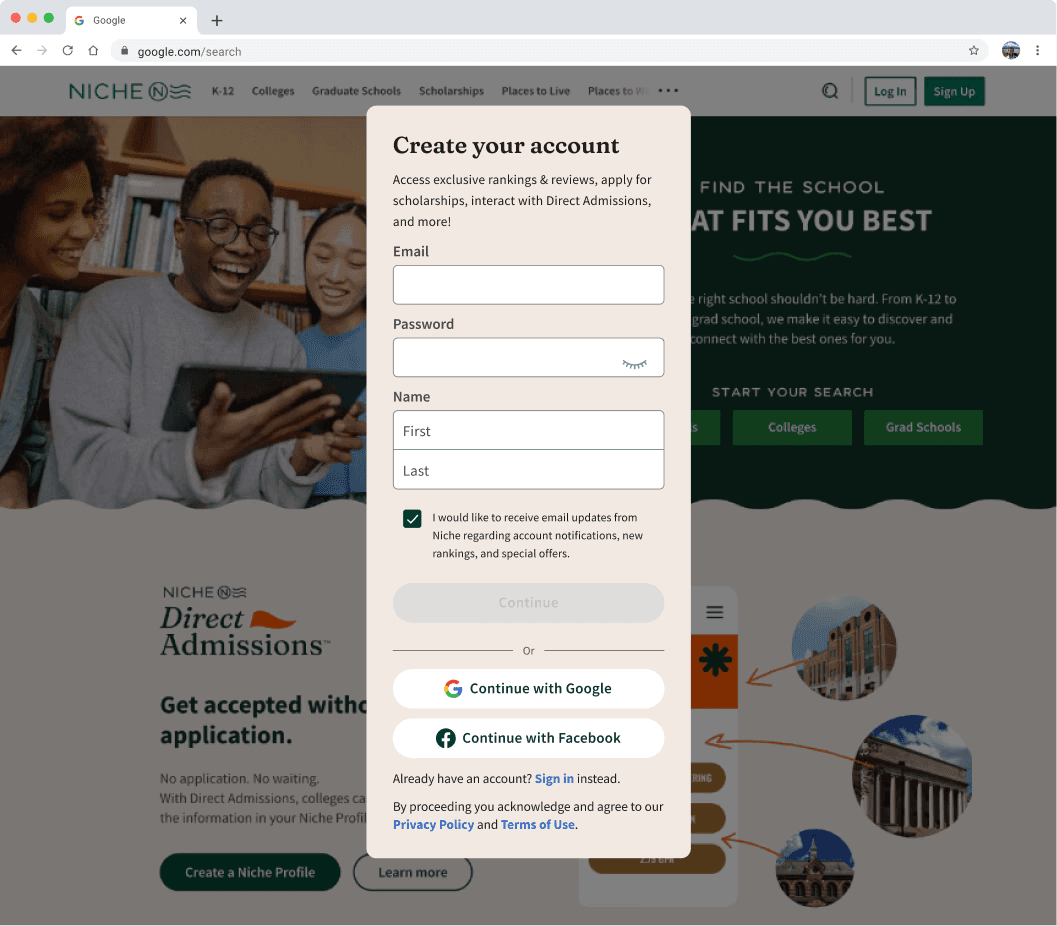
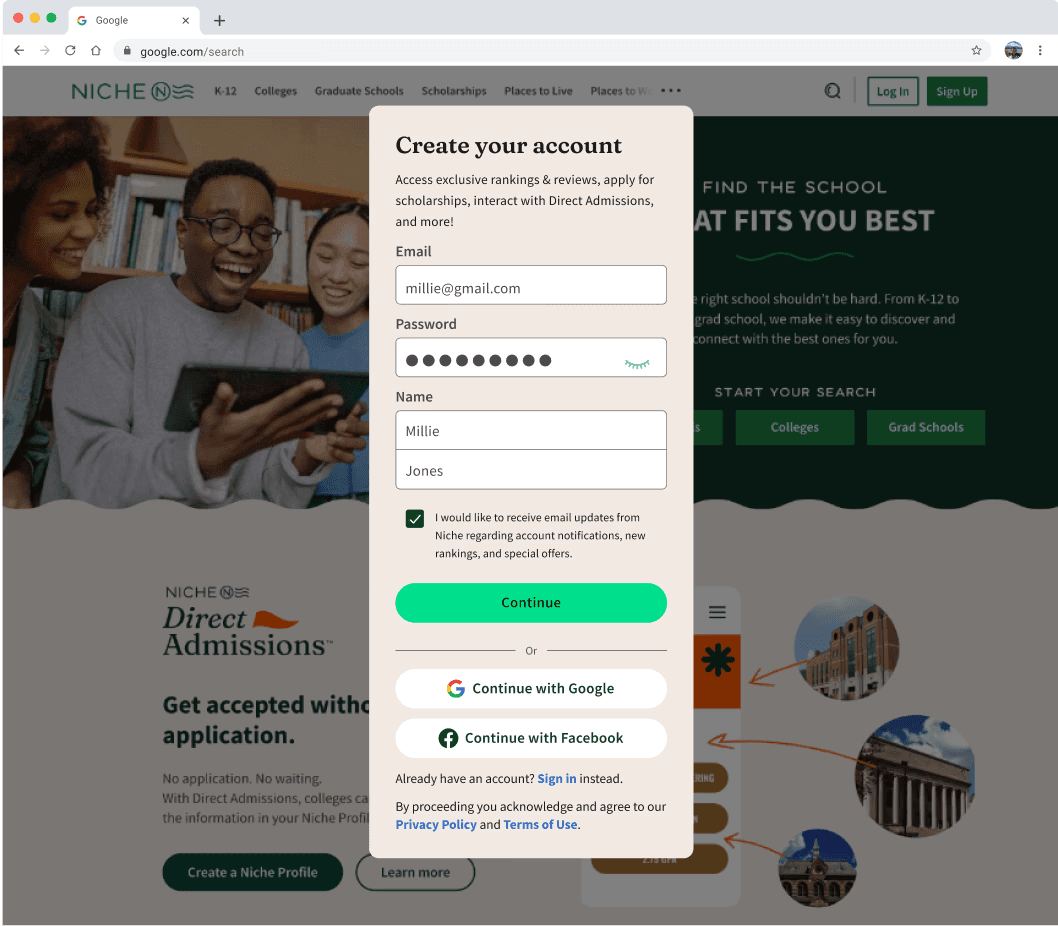
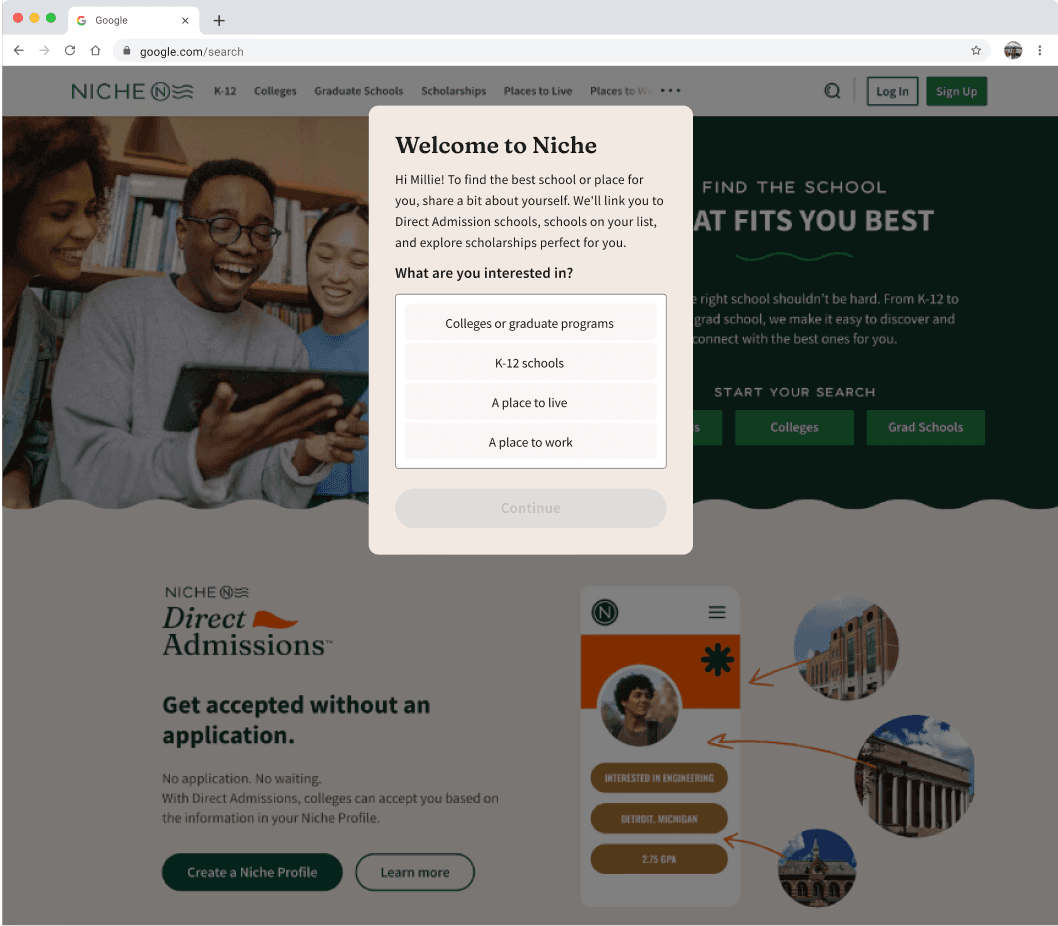
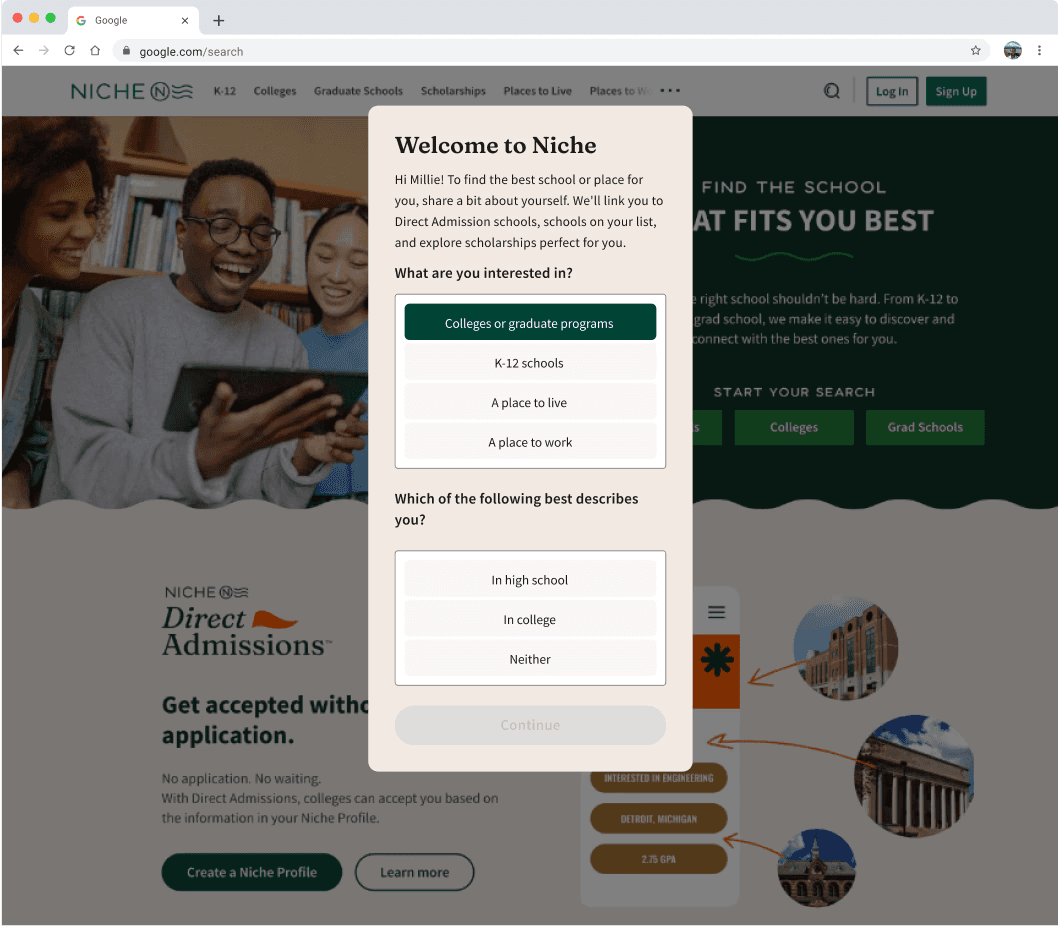
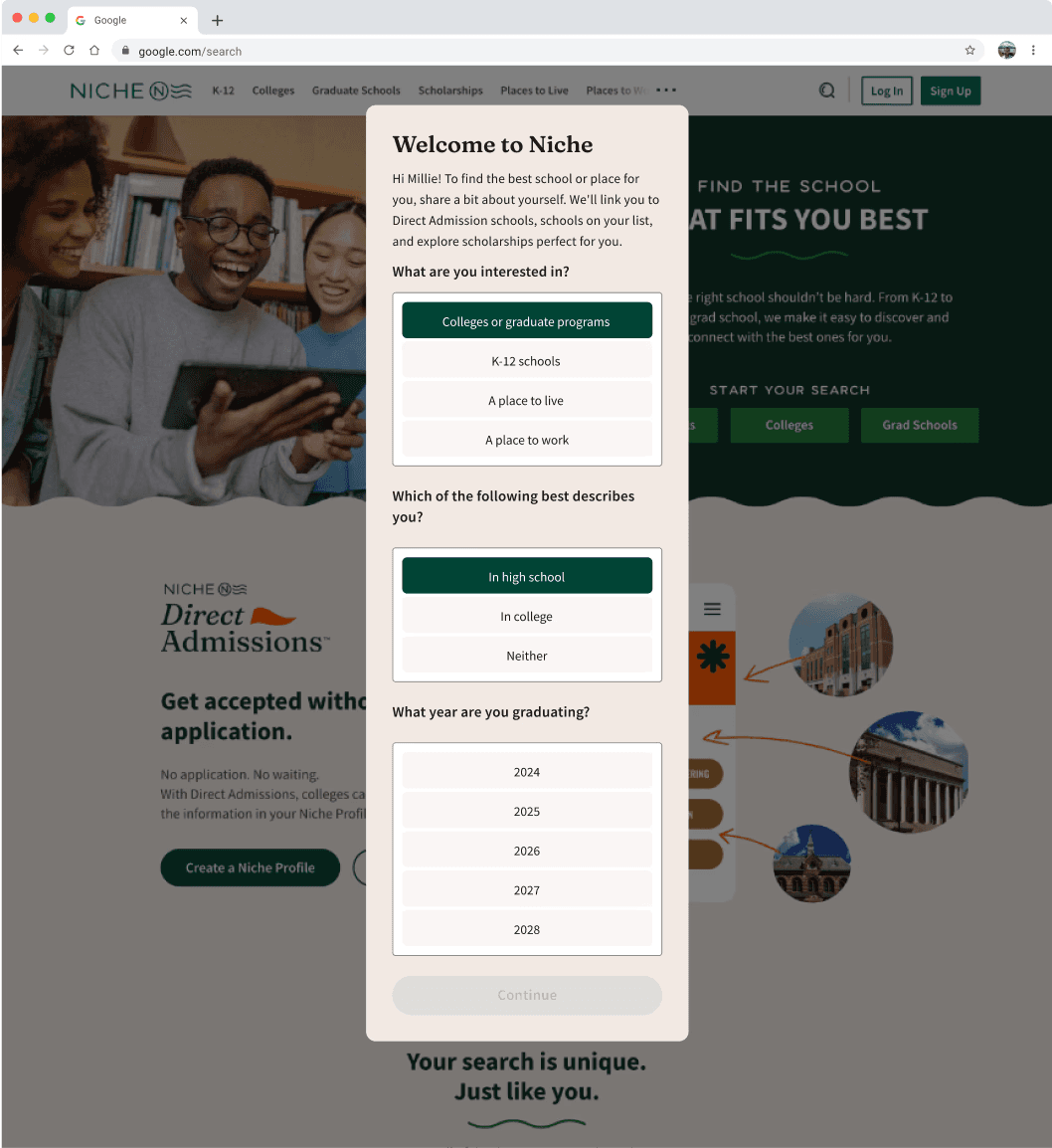
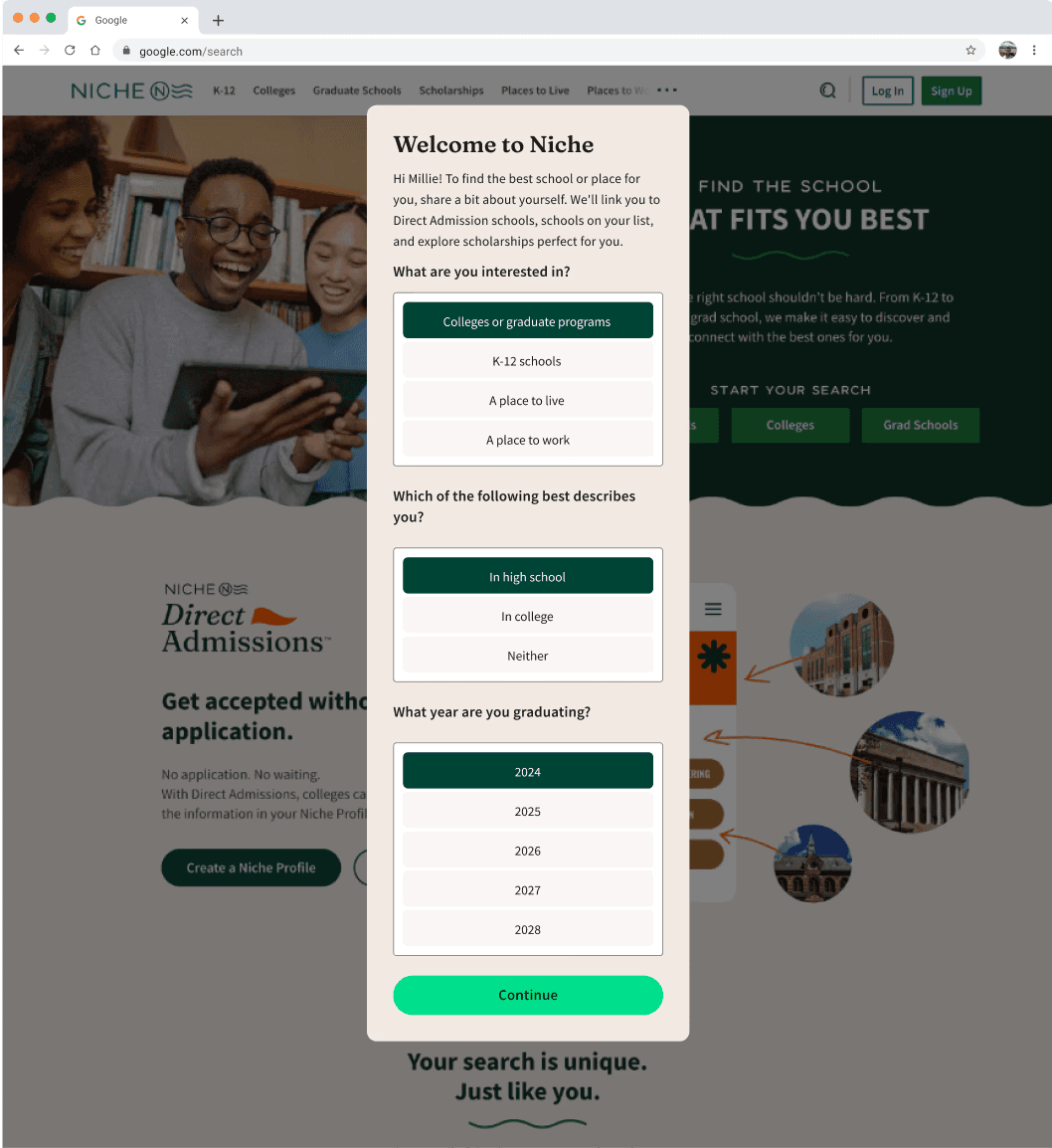
Previous version
SOLUTIONS
Three changes that addressed the root causes
Rather than a cosmetic redesign, we focused on structural and communication changes that directly addressed why students were dropping off.
Enhanced clarity through copy and imagery
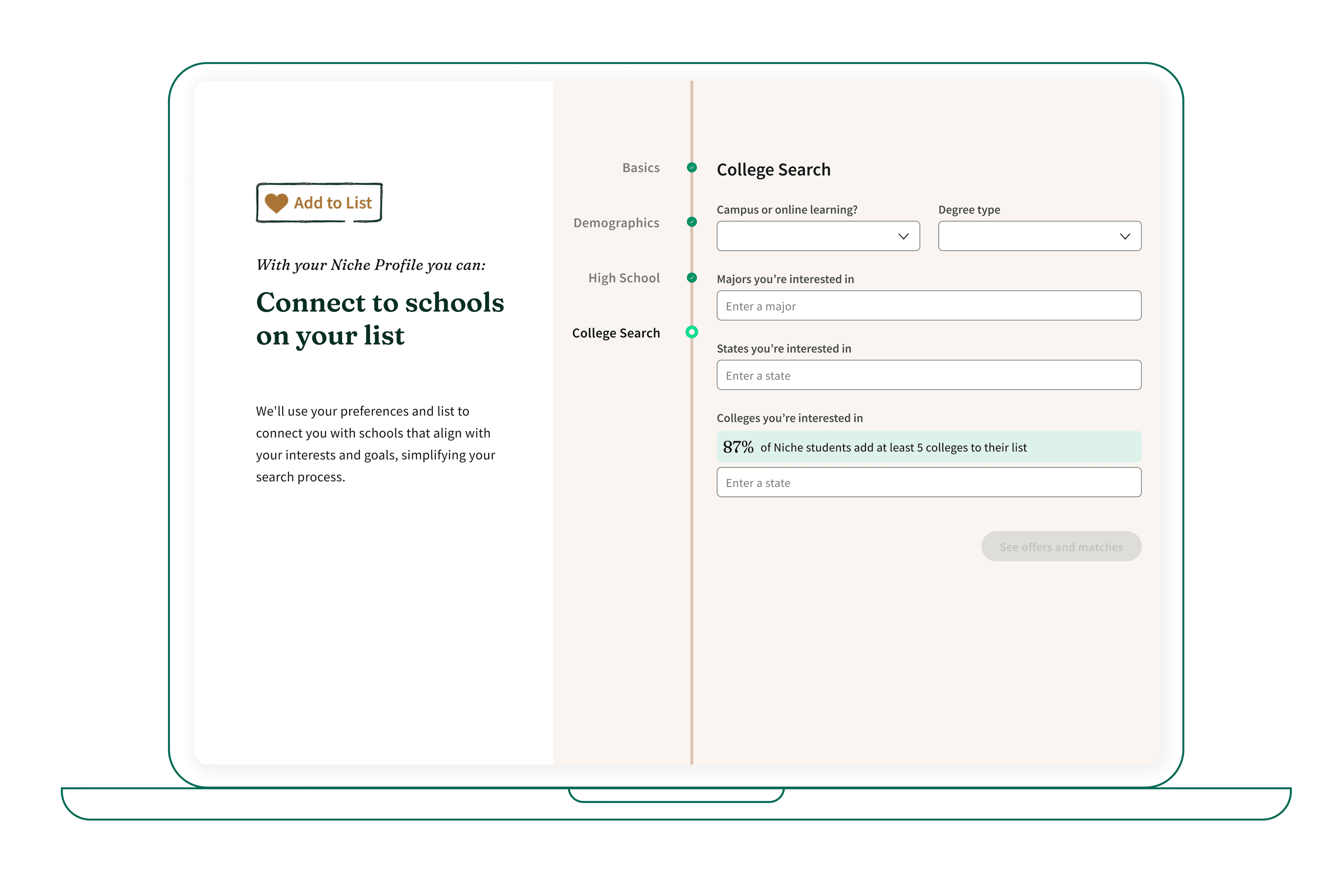
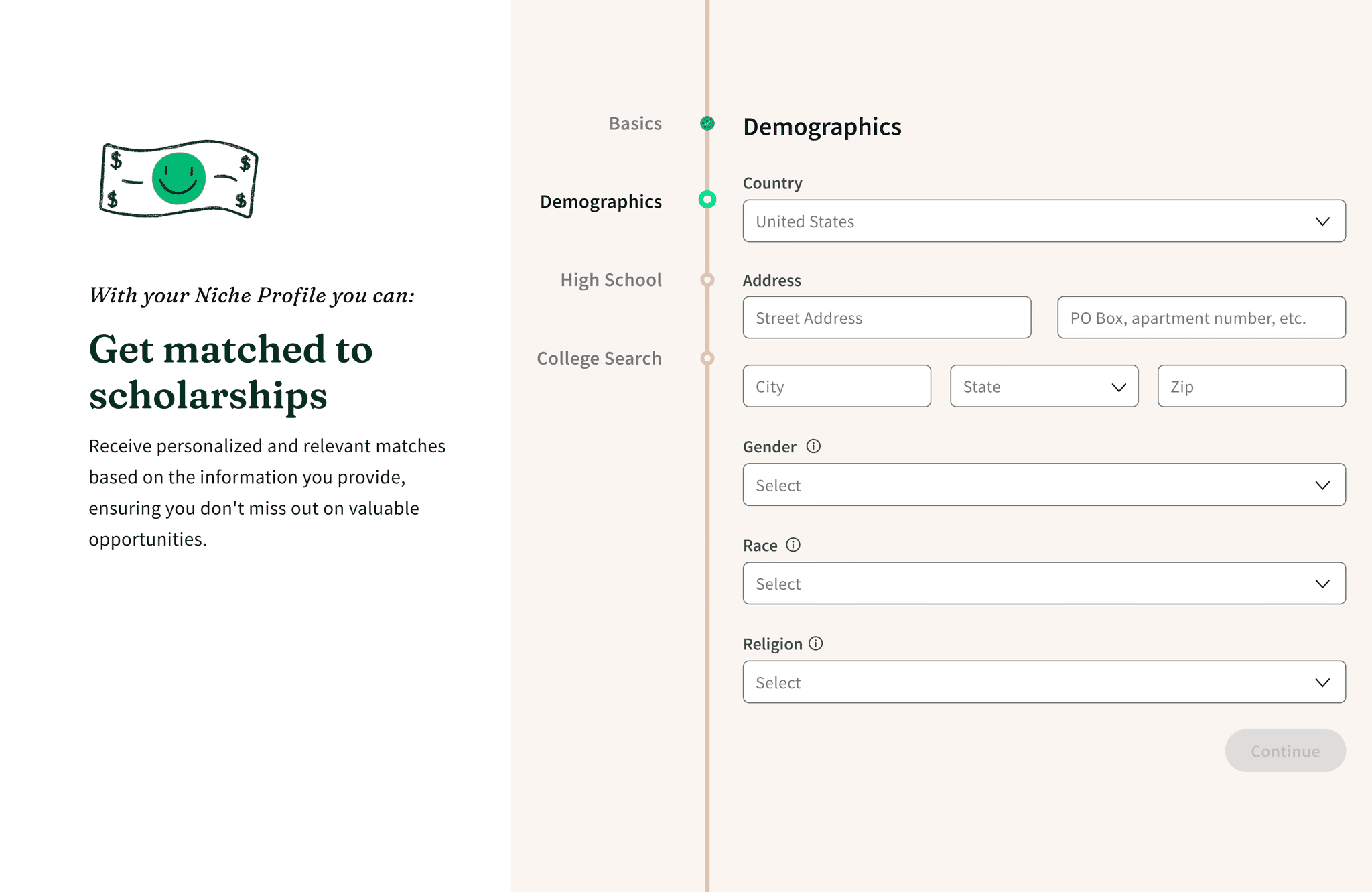
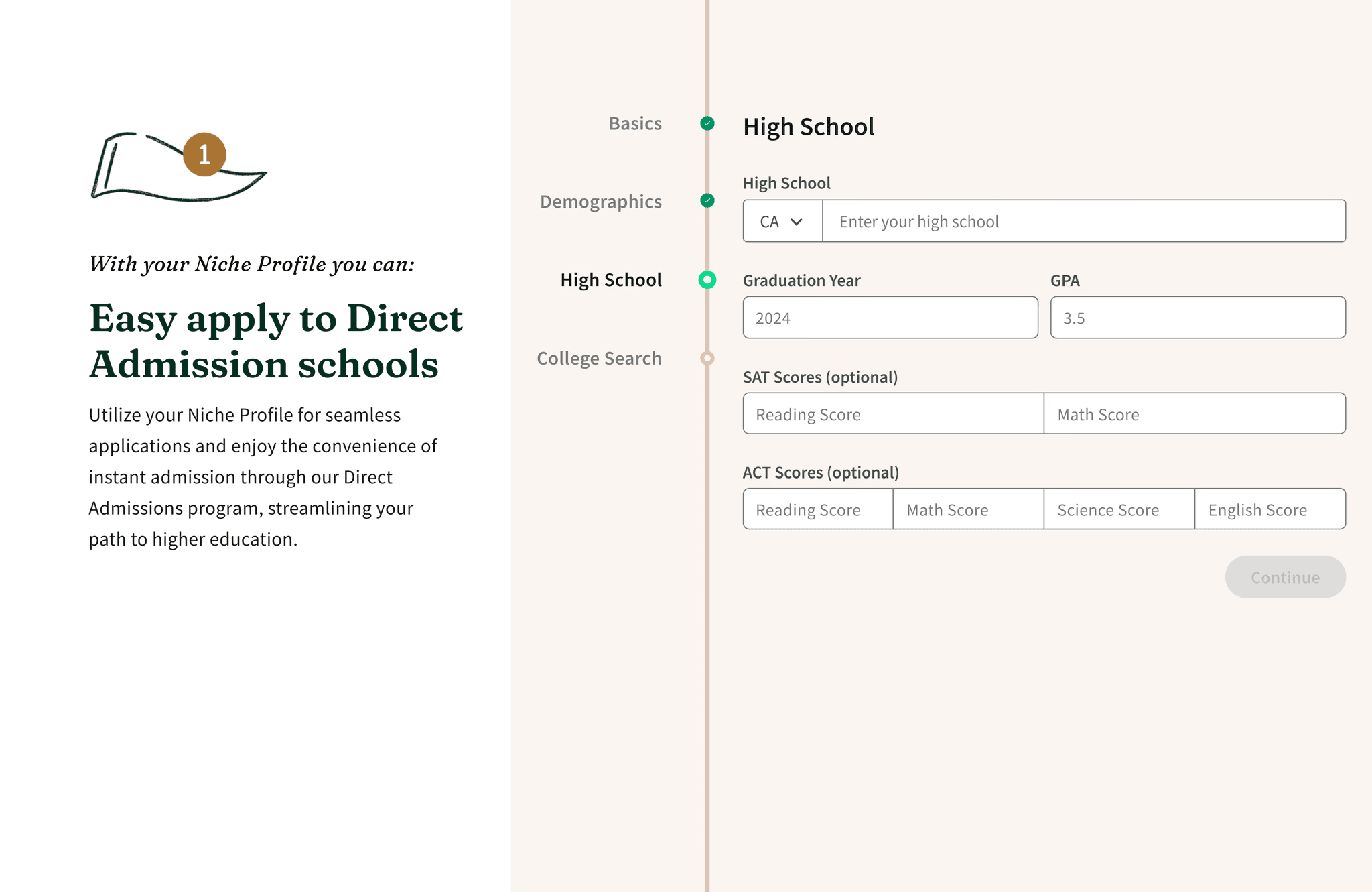
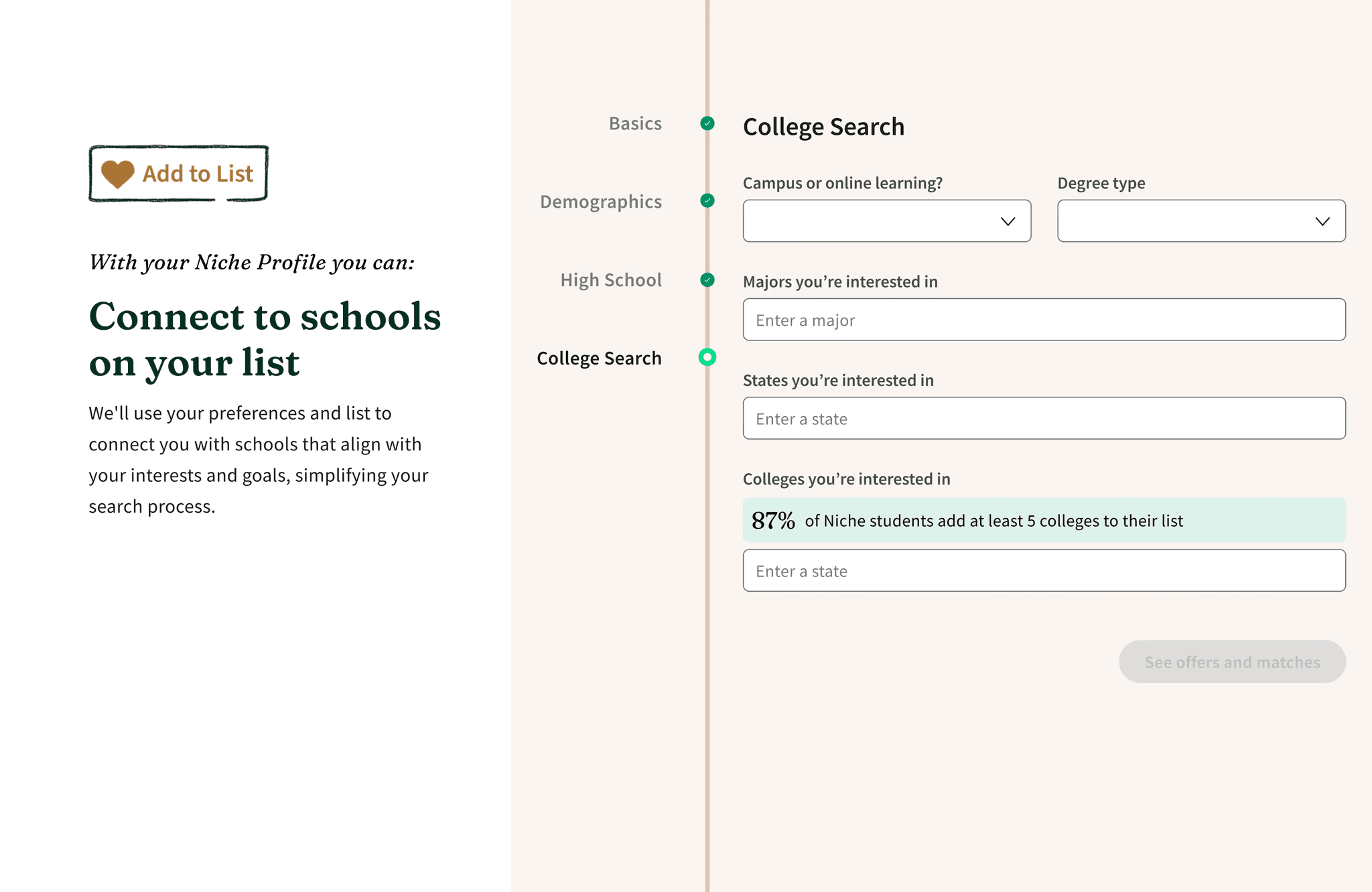
Added explanatory copy and supporting images throughout the flow to help users understand what they were signing up for and why each question mattered.
Reordered layout and information architecture
Changed the order and layout of fields so the flow followed a more logical progression — leading with identity and interest before asking for sensitive academic details.
Full-page experience
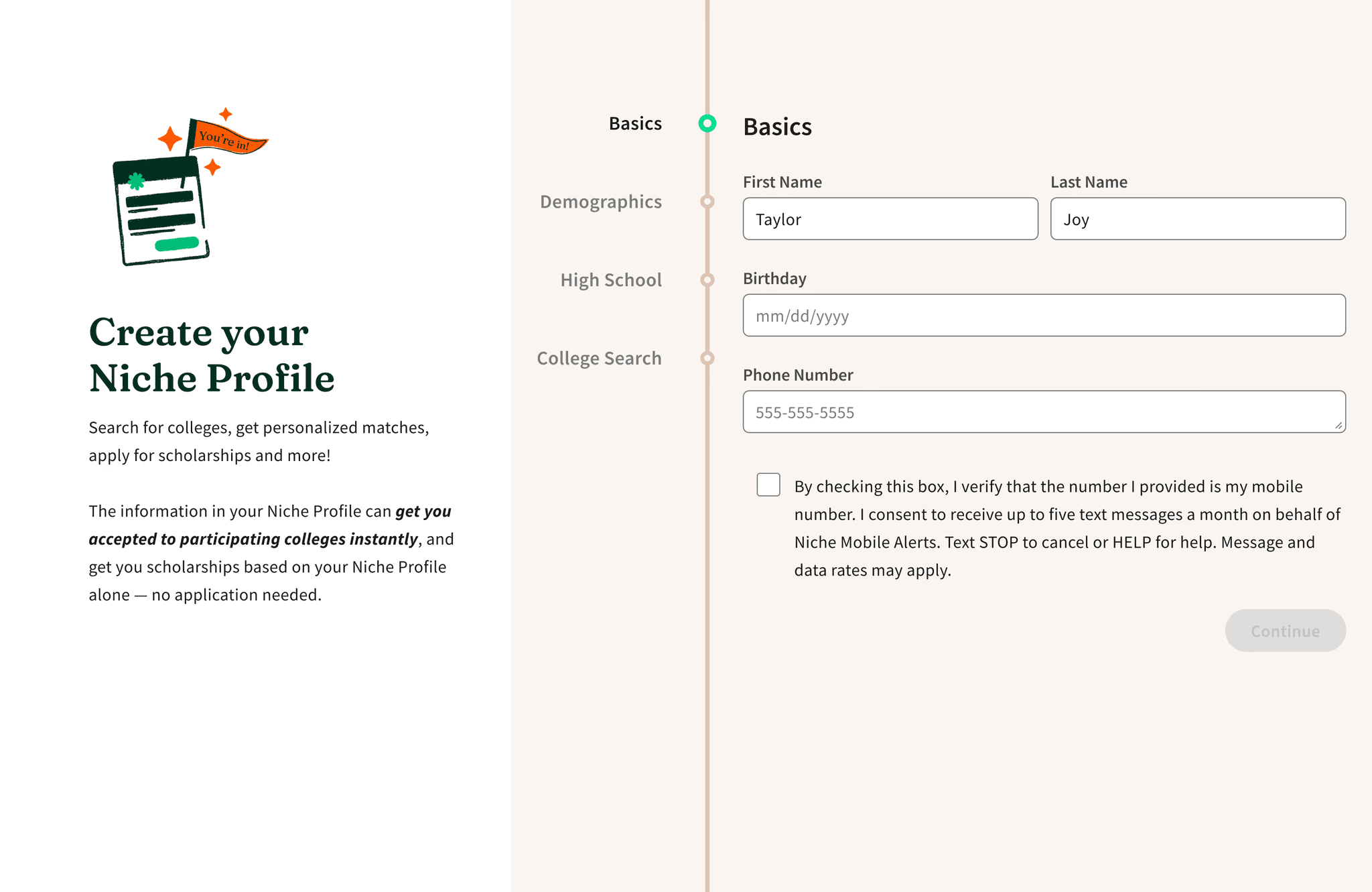
Shifted from a multi-modal approach to a full-page step design — reducing visual noise, improving focus, and creating a sense of progress that kept students moving forward.
DESIGN PROCESS
Research-led, prototype-tested, iteratively refined
As the lead designer, I collaborated with PMs and developers to ensure the new flow integrated seamlessly with the existing registration process. Creating high-quality prototypes was essential for effective user testing throughout.
Research & Ideation
Researched similar registration and onboarding flows. Studied patterns from college application experiences to inform the new direction.
Sketching
Sketched initial recommendations based on research findings. Generated multiple concepts before committing to a direction.
Wireframes & Iteration
Built detailed wireframes, iterated based on internal feedback, and evolved designs through multiple rounds before moving to high fidelity.
Prototype Testing
Conducted 10 user interviews with high school students in the context of college applications. Refined the final design based on their feedback.
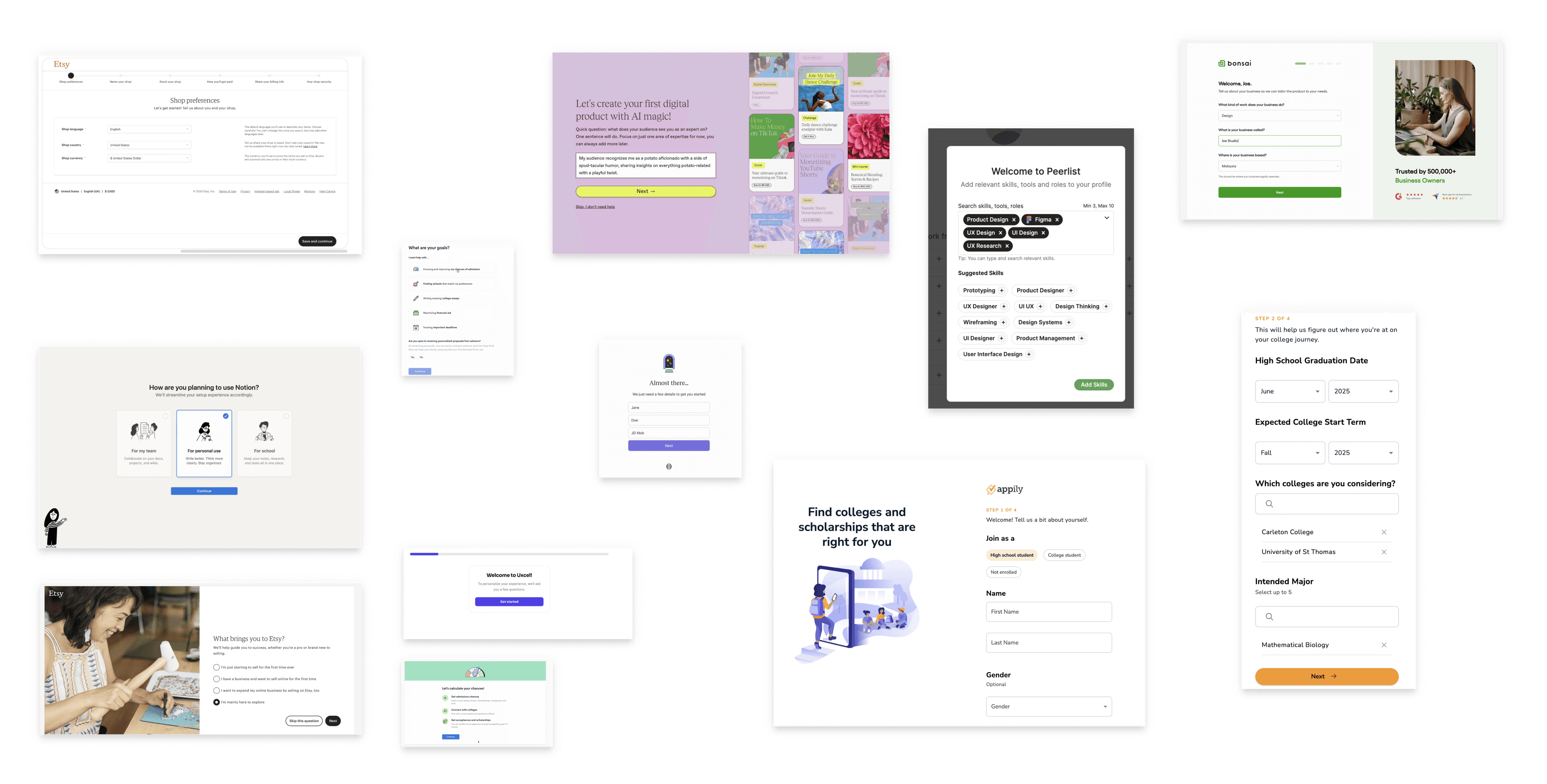
Research
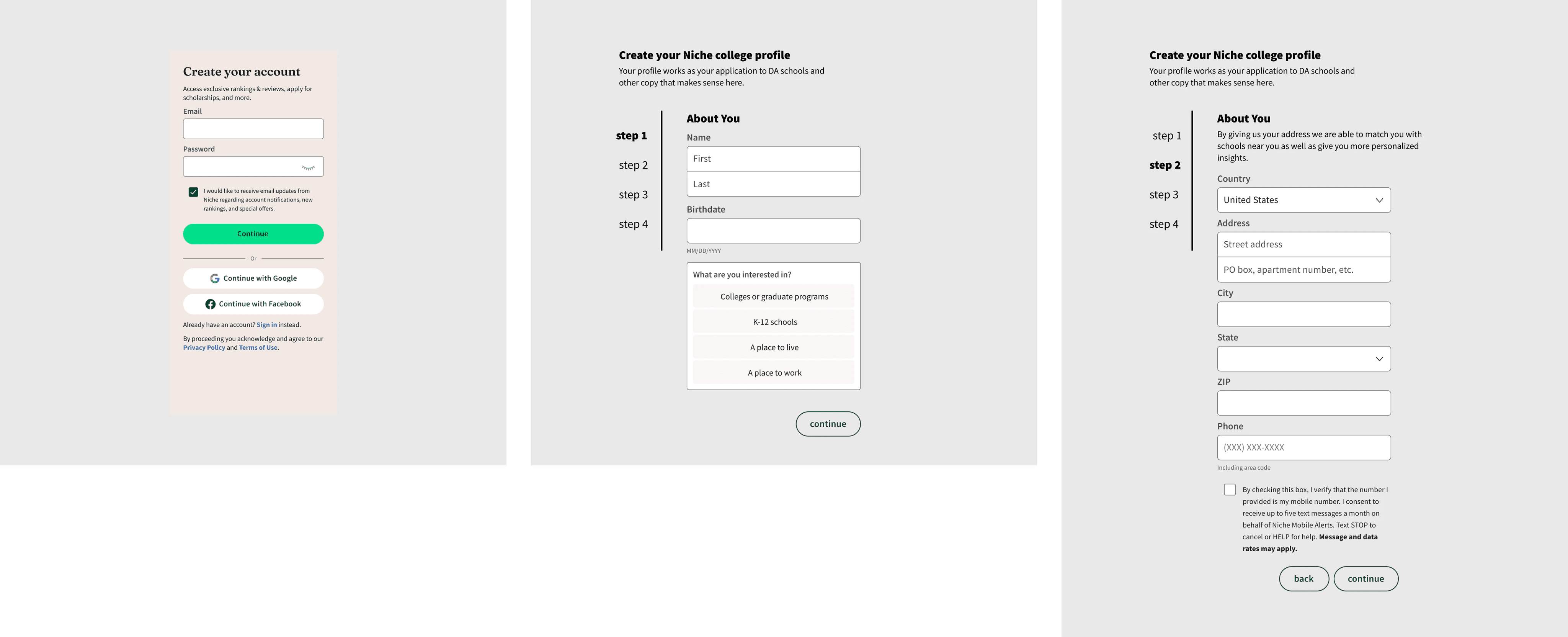
First round sketches
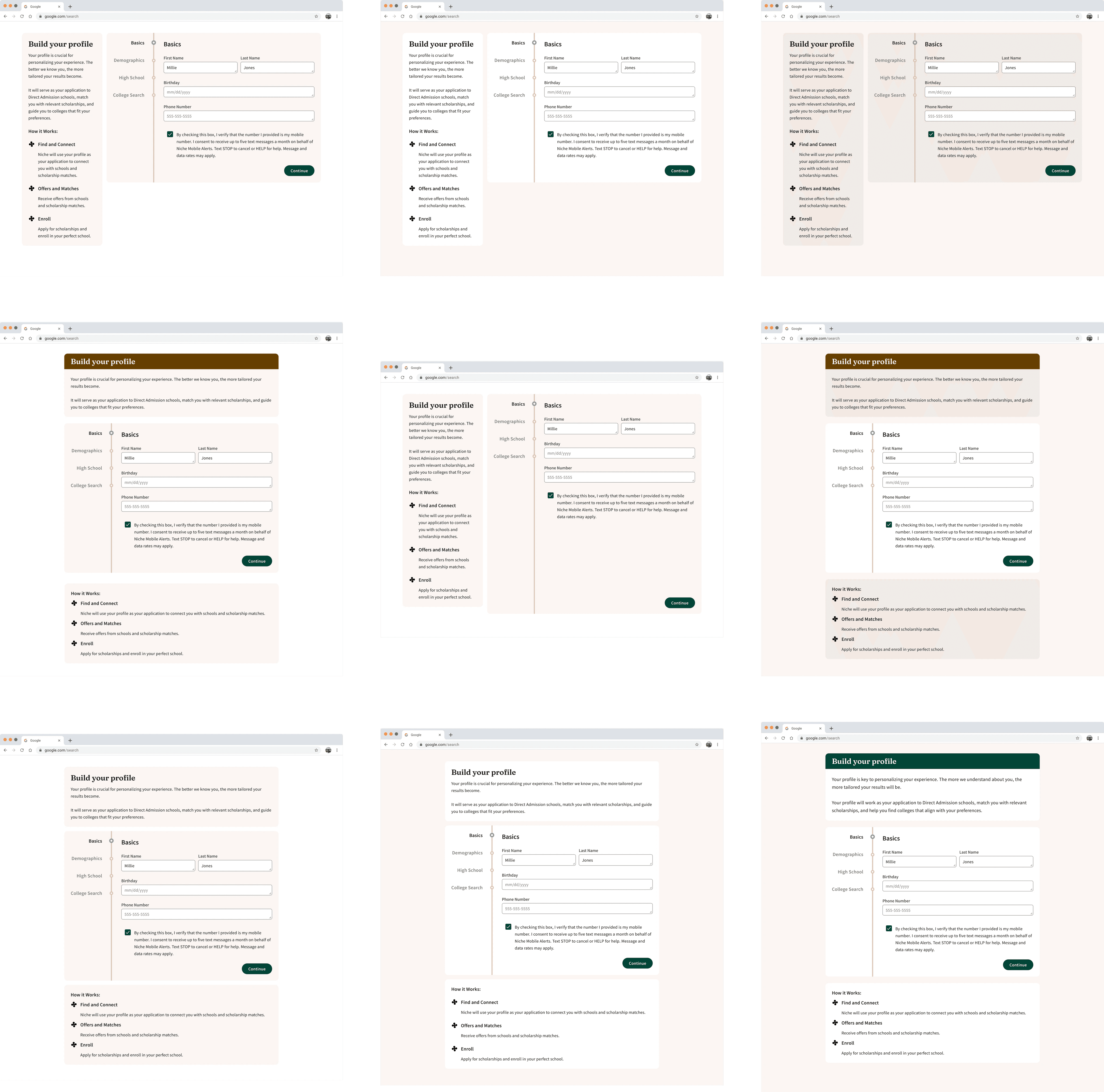
Design iterations
FINAL DESIGNS
A flow that feels like building a profile, not filling out a form
The final designs brought together the three core changes into a cohesive full-page experience — value-forward framing, logical step progression, and clear explanatory copy at every stage.
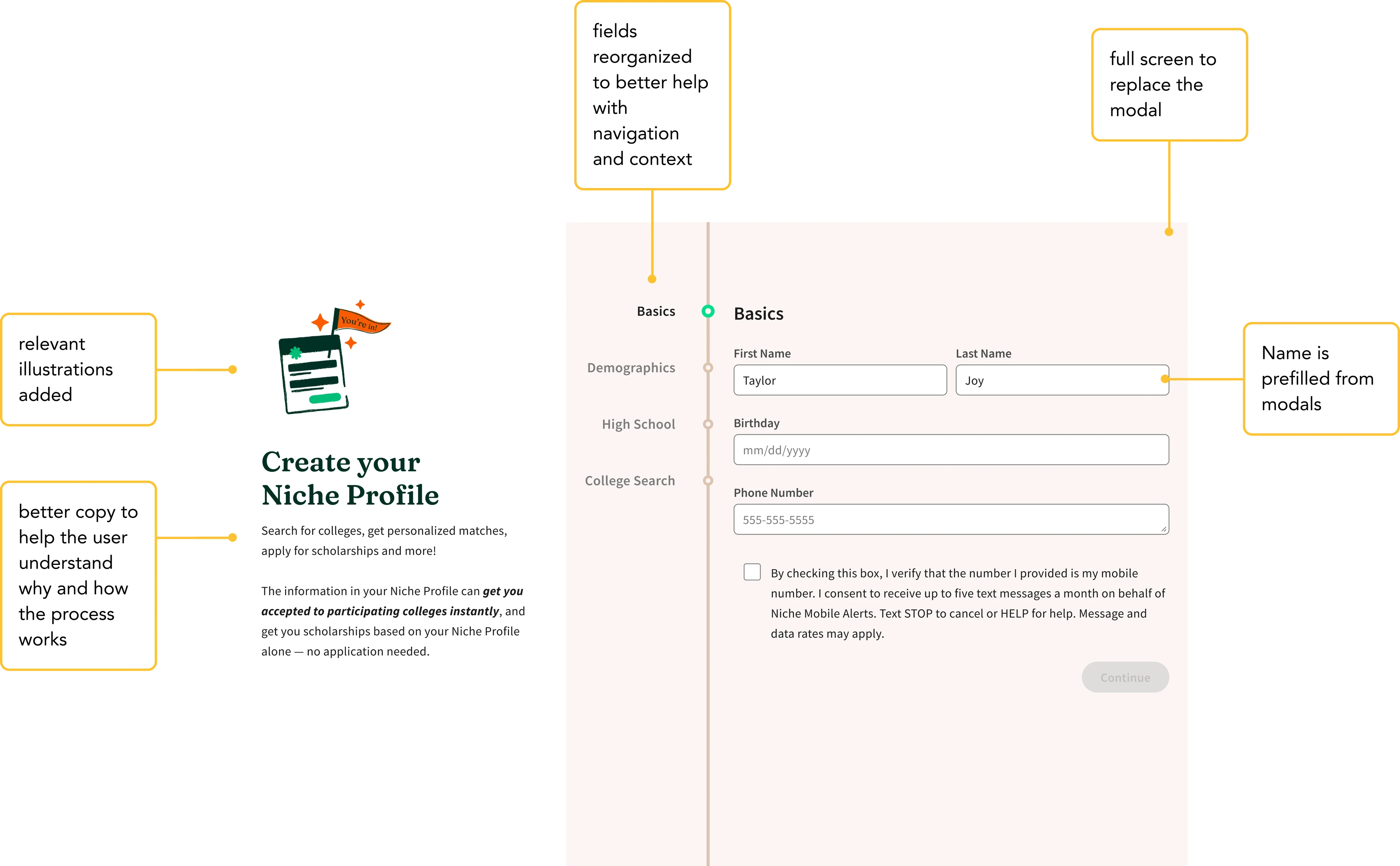
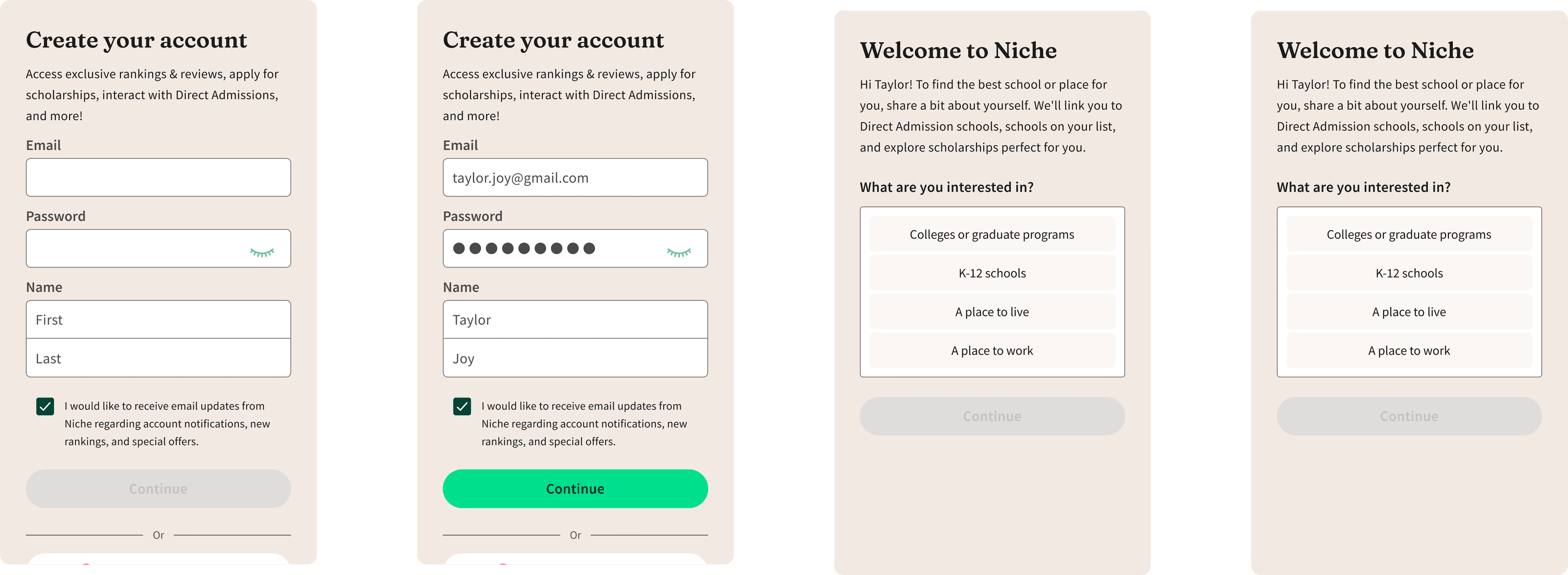
Final Designs
RESULTS AND IMPACT
Positive feedback and a clear path to A/B testing
User feedback was overwhelmingly positive. Students indicated that the new flow provided better context for the direct admissions process and clarified the purpose of the registration — exactly what we set out to achieve.
The immediate next step is to implement copy changes to guide users more effectively through each step. Following copy finalization, the plan is to run A/B testing to compare the new version against the current one and measure which performs better on enrollment and drop-off metrics.
REFLECTIONS
What I'd carry forward
The goal was to give relationship managers an at-a-glance view of their portfolio's health and key information about each constituent — without requiring them to dig through individual profiles or switch between tools.
Communication is design
The biggest improvements came from copy and framing changes, not layout changes. Helping users understand why they were being asked something reduced friction more than visual polish ever could.
Involve users early
Running 10 interviews before finalizing the design surfaced insights that no internal review could have caught. Students' mental models of college applications shaped every final decision.
Structure before aesthetics
Reordering the information architecture was unglamorous but high-impact. Getting the sequence right mattered far more than making it look polished.
Prototype fidelity matters for testing
High-quality prototypes were essential for getting genuine reactions from users. A low-fidelity wireframe wouldn't have surfaced the same quality of feedback.
© 2026 Jordan Luevano